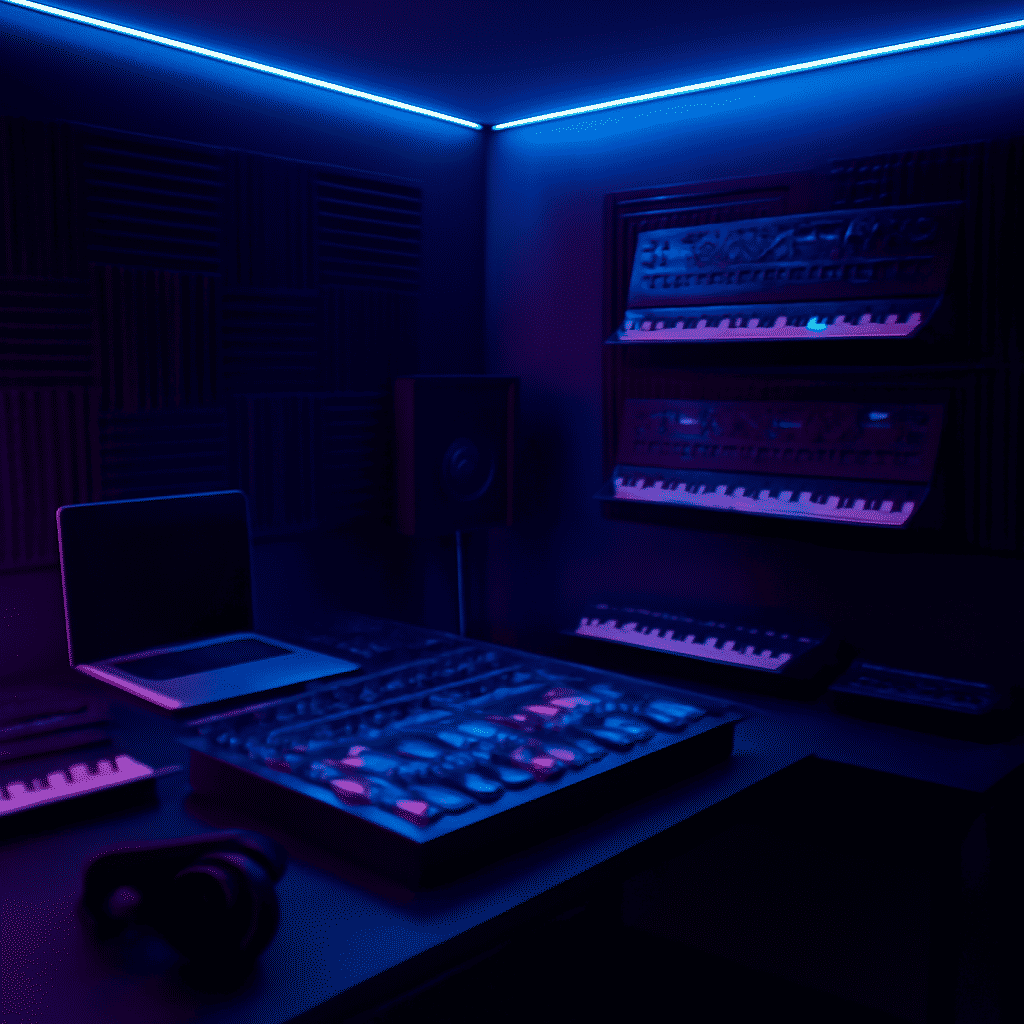
In the ever-evolving landscape of music production, modern instruments have become pivotal tools that push the boundaries of creativity and sound design. Today's advanced instruments cater to the diverse needs of musicians and producers, providing them with unprecedented control, versatility, and innovation. Let's explore some of the most cutting-edge instruments redefining the music production process today.
Digital Audio Workstations (DAWs): At the heart of modern music production lies the Digital Audio Workstation—an indispensable tool that has transformed the way music is created, recorded, and edited. Popular DAWs like Ableton Live, Logic Pro X, and FL Studio have incorporated features like multi-track recording, MIDI capabilities, and an extensive library of virtual instruments and effects, allowing producers to compose intricate soundscapes and dynamic compositions with ease.
Virtual Instruments: Virtual instruments have revolutionized music production, offering endless possibilities without the need for physical counterparts. Synthesizers like Native Instruments' Massive X or Serum by Xfer Records deliver customizable sound design options that are perfect for electronic music producers seeking unique tones. Sample libraries such as EastWest's Hollywood Orchestra bring the authentic sound of real instruments to compositions, providing composers with a detailed, lifelike orchestral palette.
Hybrid Synthesizers: Hybrid synthesizers merge analog warmth with digital precision, creating a new frontier in sound creation. Instruments like the Arturia PolyBrute or the Moog One harness the essence of vintage synths while incorporating state-of-the-art digital technology. This fusion results in instruments that offer an unparalleled breadth of sonic capabilities, from lush pads to cutting-edge sound effects.
Touch-Sensitive Controllers: Touch-sensitive controllers have emerged as powerful tools in modern music production. Devices like the ROLI Seaboard or Ableton Push provide musicians with intuitive, tactile interfaces that respond to nuanced gestures, enabling expressive performances that go beyond traditional keyboards. These controllers open up new avenues for creativity, allowing artists to manipulate sound in real-time, providing unprecedented human expressivity.
AI-Driven Tools: Artificial intelligence is beginning to play a significant role in the music production process. AI-driven tools like LANDR for mastering and AIVA, which assists in composing, harness machine learning to optimize sound quality and propose musical ideas. By understanding patterns and offering suggestions, these tools facilitate the creative process and can inspire fresh directions in composition and production.
Eurorack Modular Synths: Modular synthesizers, particularly the Eurorack format, offer sound designers near-ultimate freedom to craft unique sounds. By manually patching various modules, users can create intricate soundscapes that are impossible to replicate with traditional instruments. The modular community continually develops new modules, pushing the boundaries of what's creatively possible and allowing producers to build customized systems tailored to their specific sonic preferences.
Virtual Reality (VR) and Augmented Reality (AR) Interfaces: Emerging technologies such as VR and AR are beginning to find their place in music production. These technologies offer immersive environments where musicians can interact with three-dimensional virtual instruments. Platforms like Soundstage or Tilt Brush enable users to sculpt sounds and visualize audio in novel ways, fostering a deeper connection with the creative process.
Innovative Recording Equipment: Instruments are only part of the equation in modern music production; high-quality recording equipment is equally vital. Microphones like the Neumann U87 or Shure's MV7 with USB capabilities have evolved to meet the needs of at-home producers, providing professional-grade sound capture in versatile formats. Innovations in recording technology ensure that music producers can achieve pristine audio quality, regardless of their setup.
In summary, the current landscape of music production is characterized by a synergy of advanced instruments and technologies. These modern tools expand creative possibilities for musicians, enabling them to produce work that is both innovative and expressive. As technology continues to evolve, the future of music production promises to be even more dynamic and boundary-pushing, providing artists with tools that capture the complexities of modern sound.